Let’s be real: nobody plans for an emergency asbestos cleanup.
You buy a house, you budget for fresh paint and new floors, and you line up your remodel timeline. The last thing you expect is state regulators showing up at your door, red hazard tape sealing off your backyard, and certified crews in respirators digging out contaminated dirt by the shovel-load.
That is exactly what happened on this property in Mountlake Terrace, Washington. And it is a textbook lesson in what happens when someone cuts corners on an asbestos survey.
The Auction Buy That Turned Toxic
The new owner purchased this Mountlake Terrace home at auction. But before they ever took possession, someone had already gone to town on the interior.
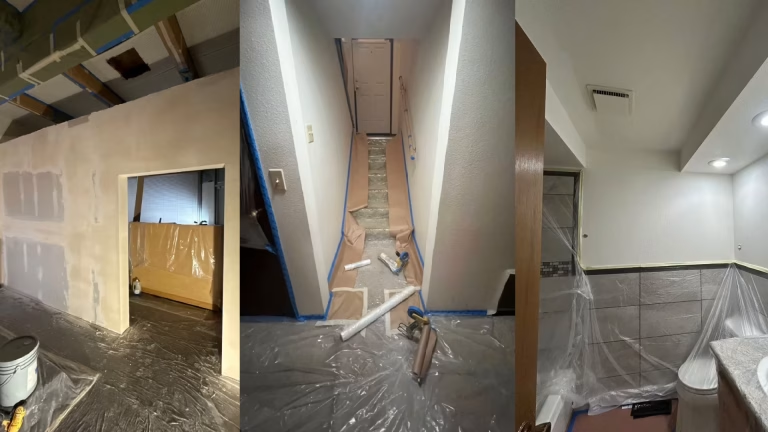
Based on the wreckage left behind, someone decided to scrape the textured popcorn ceilings. They didn’t set up containment. They didn’t run HEPA filtration. And they certainly didn’t bother testing the material first.
Instead, they scraped the acoustic ceiling texture, pulverized it, and left toxic debris scattered across the floors throughout the home. Then, as if that wasn’t bad enough, they shoveled the popcorn ceiling waste out the back door and dumped it straight into the backyard dirt.
When uncertified operators or hasty flippers do unpermitted work, they don’t just create a mess—they create a hazardous contamination zone.
The “Survey” That Missed the Elephant in the Room
Here is where the story gets egregious.
There was an asbestos survey provided for this property. But when you opened the report, the popcorn ceiling material was nowhere to be found. It wasn’t cited. It wasn’t sampled. It was completely ignored.
How an asbestos building inspector walks through a home and fails to notice either acoustic popcorn ceiling or piles of scraped ceiling debris sitting on the subfloor is beyond comprehension. It is sloppy at best and downright dangerous at worst.
As an AHERA-certified asbestos building inspector, when I inspect a property, every suspect material that will be disturbed gets documented and tested by the book. No assumptions, no shortcuts. If you hire someone who rushes through a walkthrough, hand-waves obvious materials, or skips critical testing, you are the one left holding the liability.
When Regulators Step In: L&I and PSCAA
Once toxic dust is loose, the project is no longer a standard remodel. It becomes an emergency environmental cleanup involving both Washington State Labor & Industries (L&I) and the Puget Sound Clean Air Agency (PSCAA).
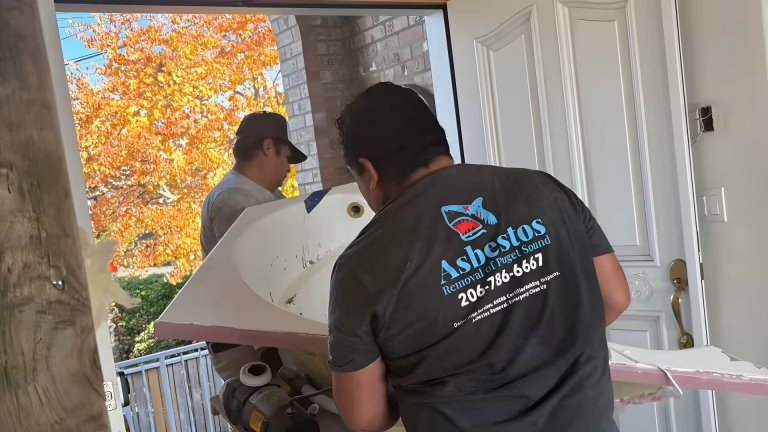
Both agencies reviewed the situation on site and agreed: the contamination was severe enough that the ceiling drywall had to come down entirely.
And because asbestos jobs love surprises, tearing into the ceiling revealed another obstacle: two complete layers of drywall. Double the weight, double the labor, and double the volume of regulated waste that must be handled under strict negative air pressure.
Digging Out the Yard: 4 Inches of Contaminated Soil
Asbestos removal isn’t just about bagging drywall inside a plastic bubble. Because the previous workers dumped toxic popcorn ceiling debris outside, the contamination spread into the yard.
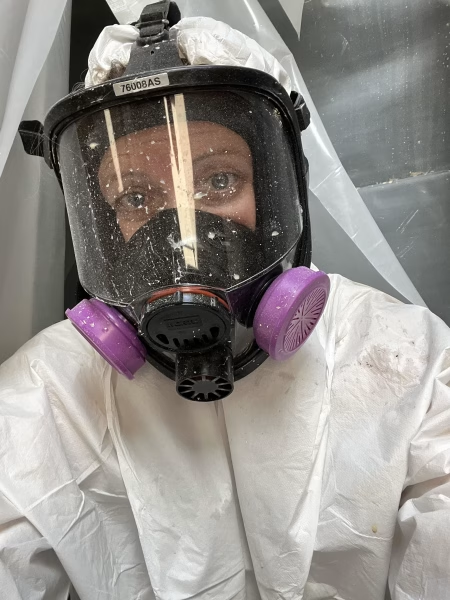
Our crew had to suit up in full Tyvek suits and PAPR respirators to excavate the earth:
- We had to dig up and haul away almost 2 inches of topsoil across the primary contaminated zones.
- In the backyard near the back steps and outdoor holes where debris had been dumped in piles, we had to excavate 3 to 4 inches of contaminated dirt.
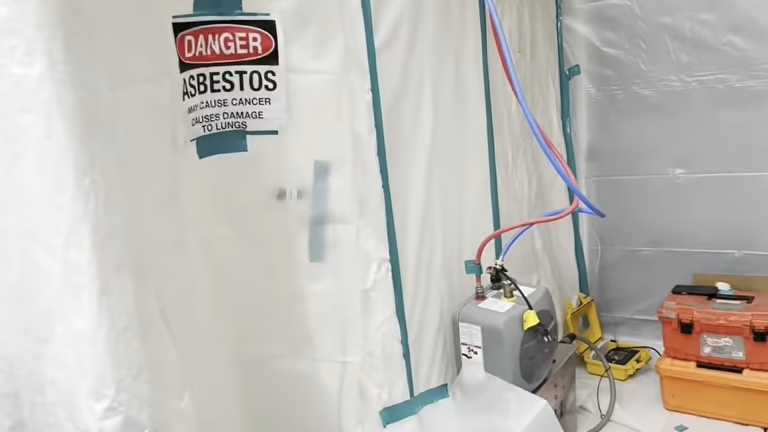
- All contaminated tools and ladders left on site had to be burrito-wrapped in heavy-duty polyethylene sheeting and sealed airtight before disposal.
- Every pound of dirt, drywall, and debris had to be double-bagged in certified asbestos disposal bags for transport to an authorized disposal facility.
With two neighboring homes right alongside the property line, maintaining surgical containment and site control was non-negotiable. To keep our three-chamber decontamination unit protected from the Pacific Northwest weather during the 3-day job, we built our decon station inside an on-site greenhouse.
Three days of intense, specialized remediation. The emergency was resolved, the site was cleared, and the property was finally made safe for demolition.
The Cost of Gambling on an Asbestos Survey
The new homeowner didn’t scrape that ceiling. They didn’t dump the asbestos in the grass. But because the previous survey was defective and unpermitted work took place, they inherited a massive regulatory nightmare and thousands of dollars in emergency remediation.
So, do you care if you get fined?
In Washington State, violating L&I asbestos rules or PSCAA notification requirements isn’t a slap on the wrist. Fines routinely start at $10,000+ per violation, work gets red-tagged immediately, and remediation costs multiply exponentially once dust contaminates soil, framing, and HVAC systems.
Before you swing a hammer, buy a fixer-upper, or hire a contractor:
- Verify AHERA credentials: Make sure your inspector is state-certified and experienced in Puget Sound housing stock.
- Review the scope: Confirm every material being disturbed—popcorn texture, vinyl flooring, joint compound, mastic—is explicitly listed and sampled.
- Never assume unlisted means safe: If a previous survey missed an obvious material, do not take the gamble. Stop and test.
- Demand permit-ready documentation: Cheap reports get rejected by city building departments and clean air agencies, delaying your project for weeks.
Stop guessing. Start testing. Do it right the first time, keep your lungs clear, and keep your project legal.
Need a Certified Asbestos Survey or Cleanup in Puget Sound?
Whether you are planning a residential remodel in Mountlake Terrace, managing a tear-down in Everett, or facing an unexpected contamination issue, Asbestos Removal of Puget Sound delivers certified, permit-ready protection.
Schedule an AHERA Asbestos Survey | Explore Our Process of Removal | Call Tina Directly: 206-786-6667