It’s a question we don’t hear very often—but it’s something we think about on almost every job.
We use a lot of plastic.
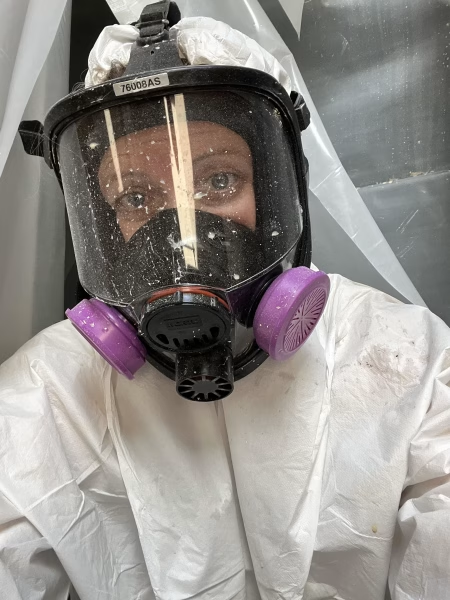
If you’ve ever seen a proper asbestos containment setup, you know what we’re talking about. Floors covered, walls lined, ceilings sealed, entryways built out—it’s basically like wrapping part of a house in a giant plastic bubble.
Why So Much?
It all comes down to safety.
When we’re removing asbestos (especially things like popcorn ceilings), we have to fully contain the work area so fibers don’t spread anywhere else. That means:
- Thick poly sheeting on every surface
- Sealed seams everywhere
- Containment chambers for entering and exiting
- Negative air machines constantly pulling air through HEPA filters
That negative air pressure? It’s no joke. It literally sucks the containment inward, so everything has to be strong, sealed tight, and able to hold up the entire time we’re working.
Now add in:
- Wet methods (so everything’s damp)
- Heat from equipment
- Jobs that last several days—or longer
That plastic isn’t just there—it’s working the whole time.
The Part We Think About
Here’s the honest side of it…
At the end of the job, all that plastic—every sheet, every layer—gets bagged up and disposed of as contaminated waste.
No recycling. No reuse.
Just… gone.
And yeah, we’ve definitely had those moments where we stop and think:
“Man, it would be nice if there was a biodegradable option for this.”
The Problem With That Idea
It sounds great in theory—but in reality, it’s not that simple.
Anything we use has to:
- Hold up under constant suction from negative air machines
- Stay strong when it’s wet the entire time
- Not tear during setup or demo
- Last for the full duration of the job
If a containment fails, that’s not just inconvenient—it’s a serious safety issue.
So whatever replaces plastic would have to perform just as well, if not better. And right now, nothing really checks all those boxes.
Where Things Stand
For now, plastic is still the standard because it works—and in this line of work, there’s no cutting corners when it comes to safety.
But that doesn’t mean we don’t think about it.
As the industry evolves, it’d be great to see:
- More sustainable materials
- Better waste solutions
- Maybe even new ways to build containment altogether
Final Thought
At the end of the day, our job is to make homes and buildings safe. That always comes first.
But yeah… if someone out there figures out a strong, waterproof, negative-air-proof, biodegradable containment material?
We’ll be first in line to try it.